Advantages and Disadvantages of PVC Floor Paper in Home Decoration
Datetime:2026-6-24From: originalClick:9
Summary | A balanced look at PVC floor paper for residential use — what it does well, where it falls short, and how to decide if it is right for your home.
PVC floor paper — sometimes called vinyl floor covering or sheet vinyl — has been around for decades, but it has undergone something of a quiet revolution in recent years. The products available today bear little resemblance to the shiny, plasticky sheets your grandmother might have had in her kitchen. That said, it remains a material that divides opinion, and for good reason. Let us take an honest look at the pros and cons.
The advantages
Water resistance is the headline benefit and the reason this material has dominated bathrooms and kitchens for so long. PVC is fundamentally waterproof. You can spill a bucket of water on it, mop it daily, or install it in a bathroom where steam is a constant presence, and it will not warp, swell, or delaminate. For households with young children or pets, this is genuinely liberating.
Comfort underfoot is another plus that is often overlooked. Unlike ceramic tiles or polished concrete, PVC has a slight give to it. It feels warmer and softer to walk on, and it is noticeably quieter — no click-clack of heels or clatter of dropped objects. If you have ever lived in a flat with hard flooring and downstairs neighbours, you will appreciate this quality.
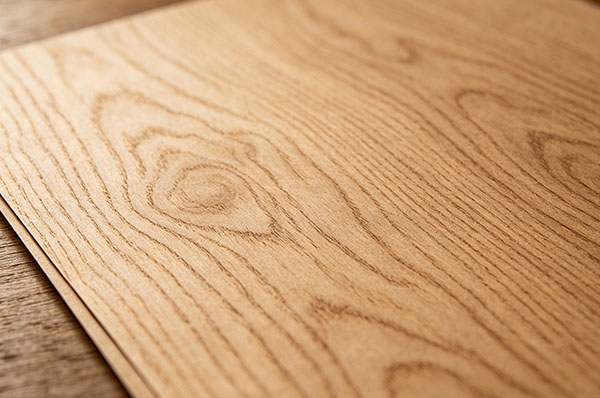
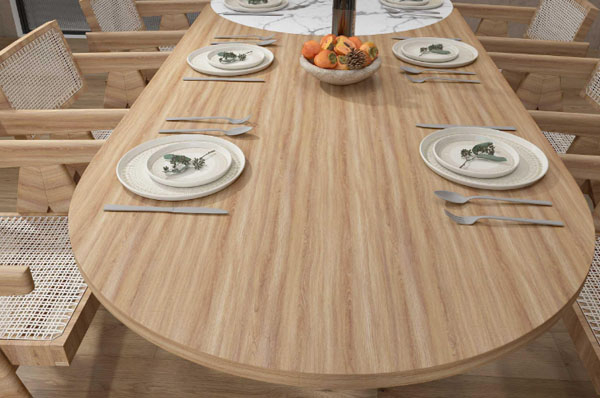
The range of designs available now is remarkable. Digital printing technology means that PVC floor paper can convincingly replicate wood, stone, ceramic, and even textured concrete. Embossing adds a tactile dimension that was simply not possible with older production methods. If you want the look of a reclaimed oak floor in your bathroom without the maintenance headache, modern PVC can deliver it surprisingly well.
Installation is generally straightforward, particularly with the newer click-lock vinyl planks that have entered the market. Even traditional sheet vinyl can be laid by a competent DIYer with the right preparation, which saves on fitting costs. Maintenance is minimal — a sweep and an occasional damp mop are all that is required.
Price-wise, PVC floor paper sits at the more affordable end of the flooring spectrum. Even the higher-end products with thick wear layers and premium designs work out cheaper per square metre than solid wood, engineered timber, or good-quality porcelain tiles.
The disadvantages
Durability is a mixed bag. The wear layer protects against everyday scuffs and scratches, but heavy furniture can leave permanent indentations. Dragging a heavy appliance across the surface will almost certainly result in a tear. Unlike laminate flooring, which can sometimes be spot-repaired, damaged PVC generally requires a section replacement or, in the case of a tear in the middle of the room, a complete re-lay.
There is an environmental concern that cannot be ignored. PVC is a petroleum-derived plastic, and its production involves chemicals that are not particularly friendly to the planet. Disposal is problematic — PVC does not biodegrade, and burning it releases toxic compounds. Some manufacturers have made progress with recycling programmes, but the industry as a whole still has a long way to go on sustainability.
Chemical sensitivity is something to be aware of during installation. New PVC flooring can off-gas volatile organic compounds (VOCs) for a period after fitting, producing that distinctive "new vinyl" smell. Most manufacturers now offer low-VOC options, and the issue typically resolves within a few days with good ventilation. Still, it is worth factoring in if anyone in the household has respiratory sensitivities.
Aesthetically, PVC will never fully replicate the depth and character of natural materials. It can get remarkably close, especially when viewed from standing height, but the lack of natural variation becomes apparent upon closer inspection. There is also an undeniable stigma attached to vinyl in some circles — a perception that it is a "budget" material rather than a design choice. Whether that matters to you is entirely personal.
Making the decision
If your priorities are water resistance, comfort, ease of maintenance, and value for money, PVC floor paper makes a strong case for itself. It is particularly well-suited to bathrooms, kitchens, utility rooms, and playrooms. If you are furnishing a period property or aiming for a premium, natural-material aesthetic throughout, you might want to look elsewhere — or at least reserve the PVC for the practical rooms and invest in something else for the living areas.




 Location: