Application Distinction of Different Thickness Wood Grain Paper
Datetime:2026-6-24From: originalClick:16
Summary | How thickness affects wood grain paper performance across different uses.
If you have ever ordered wood grain paper and been presented with a choice of grammages, the options can feel arbitrary. Sixty, seventy, eighty, or ninety grams per square metre. What difference does twenty grams make? Quite a lot. The thickness influences everything from pressing behaviour to long-term durability.
Lightweight papers: 60 to 70 gsm
These are the workhorses of flat-pack furniture. Their main advantage is cost. Less material means lower prices, which matters when producing thousands of units. They also press faster because less resin needs curing. The trade-off is coverage and durability. Lighter papers are more translucent, so substrate imperfections show through more easily. They work well for wardrobe interiors, hidden shelving, and back panels.
Mid-weight papers: 70 to 80 gsm
This is the sweet spot for general furniture. Good balance of cost, coverage, and durability. Thick enough to reduce telegraphing while standing up to everyday wear. For kitchen cabinet doors, office desks, or retail units, mid-weight is the sensible choice. Most manufacturers offer their widest design range in this bracket.
Heavyweight papers: 80 to 90 plus gsm
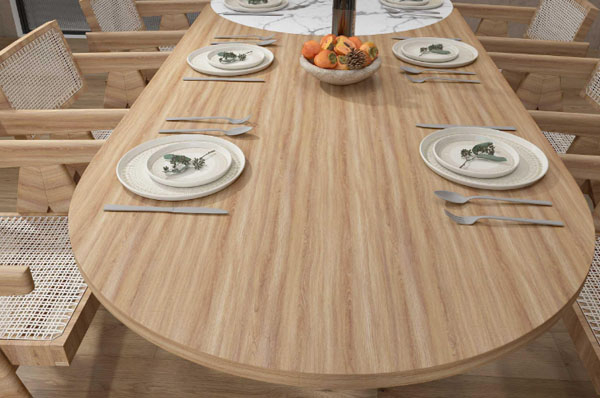
The premium option, and priced accordingly. Near-perfect substrate coverage virtually eliminates telegraphing on lower-grade boards. The extra resin creates a deeper, richer finish. Ideal for restaurant tabletops, reception counters, and shopfitting where surfaces face heavy use. Better scratch resistance pays dividends over the product life. The trade-off is longer press cycles and reduced flexibility for curved surfaces.
Making the choice
Do not automatically reach for the cheapest. Calculate total cost of ownership including reject rates and warranty claims. A mid-weight paper costing fifteen percent more that halves your reject rate is actually cheaper. For premium lines, heavyweights are worth the investment. For budget furniture with rarely seen surfaces, lightweight papers are perfectly adequate.





 Location: