Key Functional Advantages of Melamine Paper: Heat, Scratch and Moisture Resistance
Datetime:2026-6-24From: originalClick:9
Summary | A detailed look at the three core performance properties of melamine paper.
Melamine paper is specified for its appearance but stays specified because of how it performs. The three functional properties that matter most are heat resistance, scratch resistance, and moisture resistance. Understanding what each actually means helps you make better decisions about where and how to use the material.
Heat resistance
Melamine resin, when fully cured, is a thermoset plastic with a decomposition temperature above 200 degrees Celsius. It does not melt or soften when heated, unlike thermoplastics. A quality melamine surface handles brief contact with hot mugs, plates from warming drawers, and moderately hot pans. Most quality papers are rated for short-term contact at 180 degrees Celsius.
The practical advice is simple. For brief contact such as placing a hot mug on a melamine worktop, the surface handles it without issue. For prolonged contact with very hot objects, such as a roasting dish straight from a 220 degree oven left on the surface, damage is likely. A trivet costs almost nothing and eliminates the risk entirely.
Scratch resistance
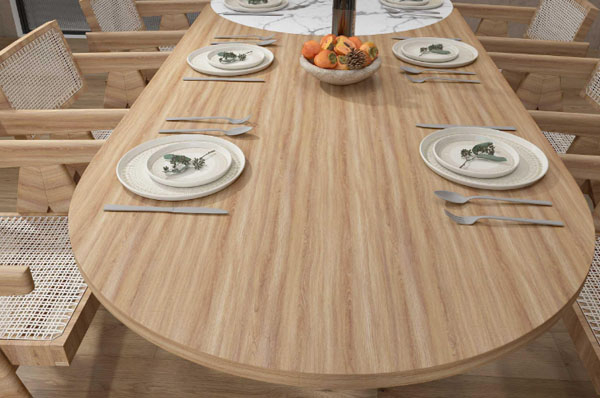
The surface hardness of cured melamine resin is approximately 6 to 7 on the Mohs scale, harder than most common household metals. A steel knife or keys drawn across the surface will not scratch it under normal pressure. This is why melamine worktops and tabletops maintain their appearance through years of daily use.
However, the surface is not scratch-proof. Ceramic, glass, and sand are harder than melamine and will cause scratches if dragged across the surface. The most common cause of scratching is abrasive grit trapped under items and then moved across the surface. Regular cleaning to remove dust and grit is the best defence. Darker colours and high-gloss finishes show scratches more readily. For scratch-prone areas, choose lighter shades with textured finishes.
Moisture resistance
The cured melamine surface is hydrophobic. Water beads on it rather than soaking in, and everyday spills wipe away without a trace. This makes melamine paper excellent for kitchens, bathrooms, and other moisture-prone areas. The weak point is the edges. The face is well protected, but cut edges expose absorbent core material. Proper edge banding and sealing are essential for any installation where moisture exposure is possible. For demanding environments such as commercial kitchens, include moisture-resistant core board and additional edge sealing.




 Location: