Difference Between Solid Wood Veneer Paper and ordinary Decorative Paper
Datetime:2026-6-24From: originalClick:9
Summary | A practical comparison of real wood veneer and printed decorative paper, helping you choose the right material for your project.
Walk through any furniture showroom and you will find pieces that look like solid wood but are not. Some are faced with real wood veneer; others use printed decorative paper. To the untrained eye, they can look remarkably similar. To the person who has to live with them for years, the differences become all too apparent.
What they are made of
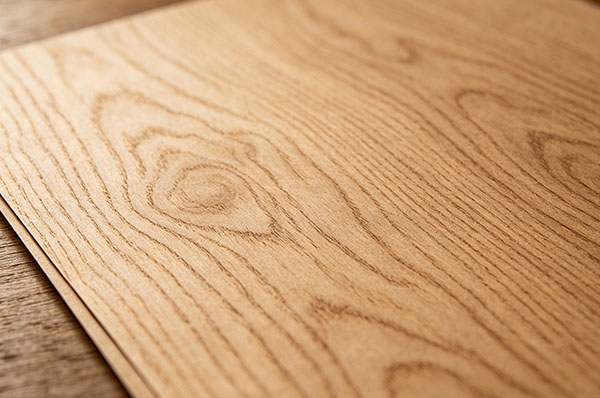
Real wood veneer is, as the name suggests, a thin slice of actual timber. It is cut from a log, typically to a thickness of 0.5 to 0.8 mm, and bonded to a substrate such as MDF or plywood. Because it is real wood, every sheet is unique. The grain pattern, the colour variations, the tiny knots and imperfections — these are the characteristics that give natural timber its appeal.
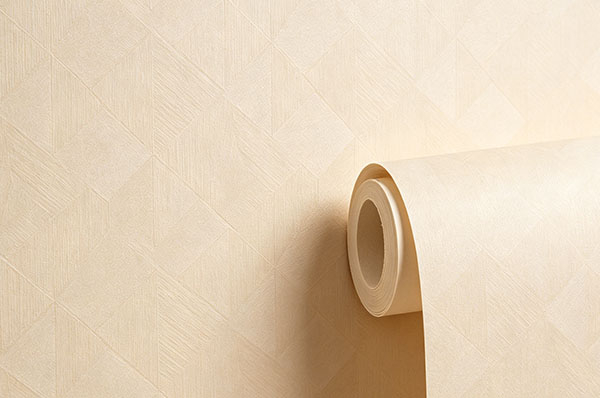
Printed decorative paper is a manufactured product. A pattern — often a wood grain, but it could be anything from stone to abstract design — is printed onto a paper base, which is then impregnated with resin and bonded to the substrate under heat and pressure. The pattern is consistent from sheet to sheet because it is reproduced from a master design, not grown in a forest.
Appearance and authenticity
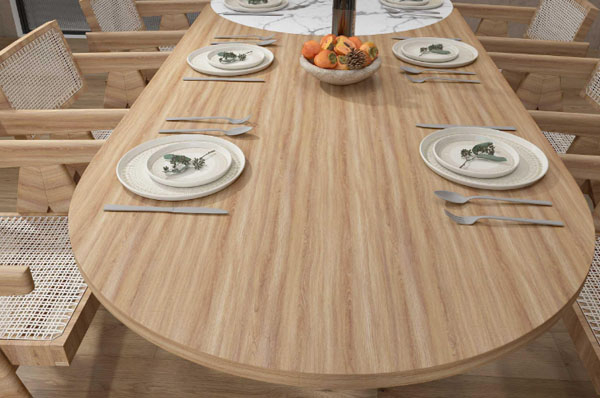
This is where the debate gets interesting. A high-quality printed decorative paper can be remarkably convincing. The best manufacturers use synchronised embossing, where the textured surface aligns precisely with the printed grain pattern. Run your hand over it and you feel the grain where you see it. From a metre away, distinguishing it from real veneer can be genuinely difficult.
But look closer, and the differences emerge. Real wood has depth. The grain shifts subtly as the light moves across it, and close inspection reveals the small, random variations that nature produces and machines struggle to replicate. Printed paper, however good, has a slight flatness to it. The pattern repeats at regular intervals, and if you look carefully, you can spot the repeat.
Real veneer also ages. It develops a patina over time, darkening slightly with exposure to light and taking on the character of its environment. This is either charming or annoying, depending on your perspective. Printed paper stays largely the same, which is consistent but can look sterile in a period setting.
Durability and maintenance
This is where printed paper generally has the edge. The melamine resin surface is harder and more scratch-resistant than a clear-coated wood veneer. It does not need oiling, waxing, or re-varnishing. Spill red wine on it, and you can wipe it off without a trace. Spill red wine on an oiled wood veneer, and you have a permanent reminder of the evening.
Real veneer, on the other hand, is repairable. A scratch or a dent can be sanded out and refinished, provided the veneer is thick enough. A deep scratch on a printed paper surface is there for good. For furniture that is likely to take a beating — kitchen tables, children's desks — printed paper is the more practical choice. For pieces that are likely to be cherished and carefully looked after, the repairability of real veneer has value.
Cost and project considerations
Real wood veneer is more expensive, sometimes significantly so. A premium walnut or oak veneer can cost three to five times as much as a high-quality printed paper of equivalent visual quality. For large projects, this differential multiplies quickly. Printed paper allows you to achieve a premium look on a larger scale without the premium price tag.
There is also an environmental angle. Veneer uses relatively little wood compared to solid timber, and the logs it comes from are often a by-product of other forestry operations. Printed paper's environmental footprint depends largely on the paper sourcing and the resin chemistry. Both can be sustainable if sourced responsibly; both can be problematic if not.
Ultimately, the choice comes down to what you value. If authenticity, uniqueness, and the ability to repair and refinish are your priorities, real wood veneer is the answer. If consistency, durability, and value for money matter more, printed decorative paper makes a compelling case.





 Location: